

GLP-1 Weight Loss Injections Explained: How They Actually Work (Brain & Body)

Daniel Zvi
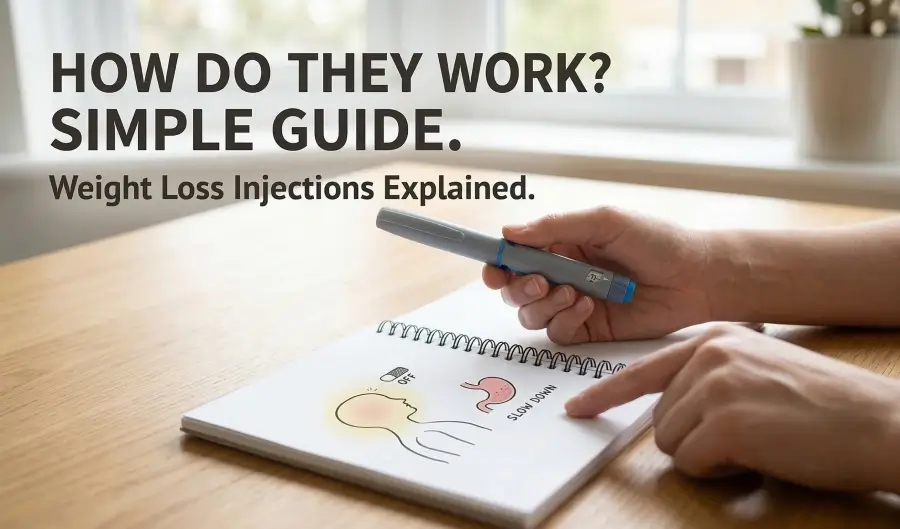
If you are trying to figure out how GLP-1 weight loss injections actually work, the most important thing to know is that they do not magically melt fat away. Instead, they act like a copycat of a natural digestive hormone to do three simple things: 1) They tell your brain you are full to turn off constant food cravings, 2) They slow down your stomach so food physically stays in there longer, and 3) They balance your blood sugar to prevent energy crashes. Combined, these three actions make it incredibly easy to eat less and lose weight without feeling starved.
 Our top picks for April 2026
 9.9
9.9


 Doctor Consultation


How It Actually Works: What Happens Inside Your Body?
What is the GLP-1 hormone?
GLP-1 is simply a chemical messenger your gut produces the moment you start eating a meal. It is your body's natural way of saying, "Hey, we have food coming in, start getting full." The medication in a weight loss pen is just a synthetic, longer-lasting version of this exact messenger. Instead of fading away in a few minutes, the shot sticks around to do its job for a whole week.
How does it quiet "food noise" in your brain?
The medication travels up to the hunger center of your brain and essentially flips a switch. By constantly triggering the receptors that handle appetite, it tricks your brain into thinking you just ate a massive Thanksgiving dinner. This is what shuts down "food noise"—those obsessive, annoying thoughts about what you are going to snack on next.
Why do you feel full so fast? (The Stomach Effect)
These shots create a deliberate traffic jam in your digestive system. They drastically slow down the rate at which food empties out of your stomach. Because your lunch is physically sitting in your stomach for hours longer than it normally would, you feel completely stuffed after eating just a few bites of dinner.
How does it balance your blood sugar?
When you eat, the medication prompts your body to release just the right amount of insulin to process the sugars in your food. At the same time, it stops your liver from pumping out unnecessary extra sugar. By keeping your blood sugar perfectly steady, it prevents those mid-afternoon sugar crashes that normally make you reach for junk food.

The "Bonus" Effects: Beyond Just Weight Loss
As millions of people have started using these medications, doctors and researchers have noticed that the shots do a lot more than just shrink your waistline.
Why do people say it stops other bad habits?
Because the medication targets the reward center of the brain—the exact same area that controls all of our impulses—many users report a sudden loss of interest in other addictive behaviors. People frequently find that they no longer have the urge to drink alcohol, smoke, online shop, or even bite their nails.
Does it lower inflammation?
Yes. Beyond digestion, GLP-1 receptors are found all over the body, including in the immune system. Studies suggest that these shots actively reduce widespread inflammation. Many users report that their chronic joint pain, swelling, and general body aches fade away within the first few months of treatment.
Single-Action vs. Dual-Action Shots
If you've been researching, you've probably noticed a few different brand names. Here is a quick breakdown of how the two main types work.
| Feature | Single-Action (Semaglutide) | Dual-Action (Tirzepatide) |
| Common Names | Wegovy, Ozempic | Zepbound, Mounjaro |
| Hormones Copied | GLP-1 only | GLP-1 + GIP |
| How it Works | Focuses heavily on slowing digestion and cutting appetite. | Adds a second hormone to further boost metabolism and fullness. |
What are single-action shots?
Medications with the ingredient semaglutide are single-action. They are designed to copy just one specific hormone in the body: the GLP-1 hormone we talked about above.
What are dual-action shots?
Medications with the ingredient tirzepatide are dual-action. They copy two different digestive hormones at the same time. Think of it as a one-two punch: by combining two messengers, users often report a stronger drop in appetite and slightly faster overall weight loss.
The Tolerance Factor: Why Do Doses Increase?
How does your body adapt to the shot?
The human body is incredibly smart and constantly tries to find balance. Over time, your brain and stomach get used to the amount of medication in your system. This is why you start on a low dose and slowly step up. If you stayed on the lowest dose forever, your body would eventually adapt, and your appetite would slowly creep back.
What is a weight loss plateau?
A plateau happens when your body has fully adjusted to your current dose, and your metabolism has slowed down to match your new, smaller food intake. To break the plateau, doctors usually step patients up to the next dosage tier to re-trigger that strong sense of fullness.
The Weight Loss Phase: Fat vs. Muscle
Do these shots target belly fat?
No, the shots do not target fat in specific areas. Because you are eating far fewer calories overall, your body is forced to start burning its stored energy to keep you moving. You will lose weight all over your body, just like you would on a traditional calorie-deficit diet.
Why do people talk about muscle loss?
When you drastically cut how much you eat, your body looks for energy anywhere it can find it—and sometimes that means burning muscle instead of fat. Because the shots make you eat so little, you have to actively prioritize eating protein to protect your muscles while the weight comes off.
Life After the Shot: What Happens If You Stop?
Does the "food noise" come back?
Yes. The medication only works while it is in your system. Once you stop taking the injections and the drug clears your body, the artificial signals telling your brain you are full will stop. For most people, the "food noise" and natural cravings return exactly as they were before.
Why is it so easy to regain the weight?
Without the medication physically slowing down your stomach and blocking your hunger signals, it becomes very easy to eat normal, larger portions again. If you haven't used your time on the medication to build entirely new habits around portions, protein, and exercise, the weight often comes back.

Finding the Right Approach to Weight Loss Injections
Understanding the mechanics of these shots is the easiest way to get the best results from them. Because they rely entirely on making you eat less, you still have to pay attention to what you put on your plate. Relying on the shot while ignoring basic nutrition will just leave you feeling tired and weak. As the science behind these tools continues to advance, the weight loss space has evolved — and so should your strategy.
In this guide, we broke down the mechanics behind the most popular single and dual-action options currently available, including Wegovy, Ozempic, Zepbound, and Mounjaro.
- Are you struggling more with constant mental "food noise" or physical stomach hunger?
- Have you thought about how you will get enough daily protein when you have zero appetite?
- Are you prepared to eat much smaller, frequent meals to avoid an upset stomach?
- Do you understand that the medication is a tool to help you eat less, not a magic fat-burner?
Our top picks for April 2026
Frequently Asked Questions
Q: Do weight loss shots directly burn fat?
A: No, these shots do not contain fat-burning chemicals and they don't artificially speed up your metabolism. They cause weight loss simply by turning off your appetite and slowing your digestion, forcing you to eat fewer calories.
Q: How fast do these shots make you stop feeling hungry?
A: It really depends on the person. Some people notice their appetite drop the very next morning after their first shot, while others don't feel a major difference until a few weeks in when they step up to a stronger dose.
Q: Why do people get an upset stomach on these shots?
A: Because the shot drastically slows down how fast your stomach empties, eating too much food causes a backup. Heavy, greasy foods sit in your stomach much longer than usual, which quickly leads to bloating, acid reflux, or feeling sick.
Q: Does your stomach shrink permanently?
A: No, your stomach doesn't permanently stretch or shrink. The slow digestion is just a temporary effect of the medication. Once you stop taking the shots, your digestion goes right back to its normal speed.
Q: Why do I have to keep taking it to keep the weight off?
A: Because the shot is what tells your brain you are full and slows your digestion. Once the medication leaves your system completely, your natural appetite and normal digestion speed return, making it easy to overeat again if you haven't built new habits.
Liked this article?
Smart Recommendations


Thank you!