

Online Weight Loss Clinics vs. In-Person Doctors: Which is Better?

Daniel Zvi
 175
175
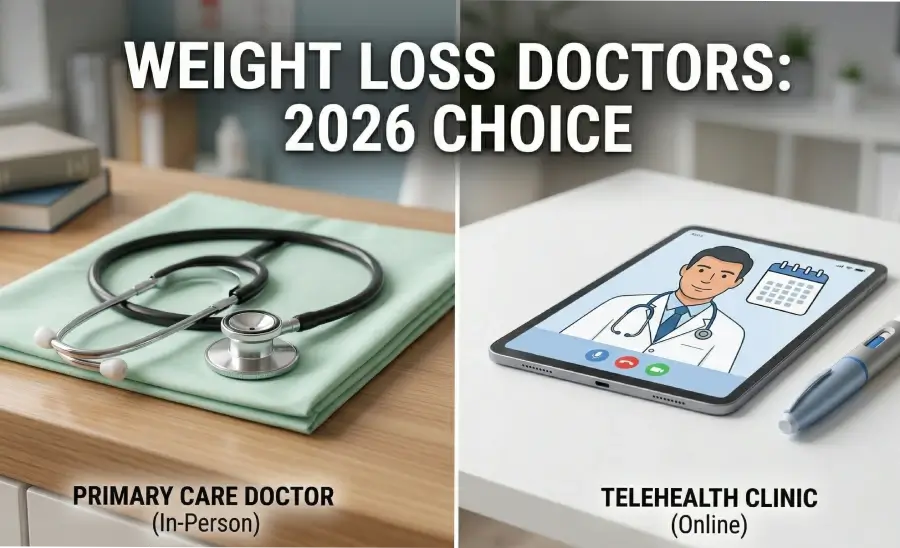
If you are trying to decide between an online weight loss clinic or a local doctor for GLP-1 treatment, the choice comes down to three critical factors: 1) Access and Speed (telehealth offers same-day appointments while local PCPs often have 3-month waitlists), 2) Clinical Depth (in-person doctors can perform physical exams and EKGs that online clinics cannot), and 3) The 2026 Regulatory Landscape (the FDA has recently restricted many online clinics from selling compounded versions, shifting the focus back to brand-name pens). For most patients in 2026, a "Hybrid Model"—starting with an in-person exam and moving to telehealth for refills—is the most effective path.
1. The Local Primary Care Route: Why "Old School" Still Wins on Trust
While the internet makes weight loss look like a simple transaction, in-person doctors offer a level of diagnostic safety that a smartphone camera can't replicate.
The Power of the Physical Exam
An in-person doctor doesn't just look at your BMI; they check your blood pressure, heart rhythm (EKG), and lung function. In 2026, this is more important than ever. As GLP-1 medications like Wegovy and Zepbound are increasingly prescribed for heart health (cardiovascular risk reduction), having a doctor who can physically listen to your heart is the difference between a "prescription" and "comprehensive care."
Navigating the "Prior Authorization" Minefield
Insurance companies are notoriously difficult when it comes to weight loss shots. Local clinics often have a dedicated "Insurance Coordinator" whose entire job is to call your provider and fight for coverage.
- Success Rate: Local doctors generally have a higher success rate for insurance approvals because they can submit physical exam notes and on-site lab results as "clinical proof" of necessity.
 Our top picks for October 2026
 9.9
9.9


 Provider Consultation

2. The Online Telehealth Route: The King of Convenience
Telehealth isn't just for people who are busy; it’s for people who are tired of the "waiting room game."
Speed of Care
In many major U.S. cities, the wait time to see a primary care doctor is currently 12 to 16 weeks. An online weight loss clinic can usually get you in front of a board-certified doctor within 24 to 48 hours.
One of the biggest reasons patients flock to telehealth is to avoid the "lecture." Online clinics are built by obesity medicine specialists who treat weight as a metabolic disease, not a character flaw. You get high-level care without the feeling of being judged by a doctor who still believes in "willpower" over biology.
3. The 2026 Comparison: At a Glance
| Feature | In-Person Doctor | Online Telehealth Clinic |
| Wait Time | 4 - 12 Weeks | 1 - 2 Days |
| Initial Cost | Insurance Copay ($20-$50) | Membership Fee ($79-$149) |
| Physical Exam | Full Vital Signs & EKG | Visual Assessment Only |
| Lab Work | Done On-Site | You must go to a local Quest/Labcorp |
| Insurance Strategy | Heavy lifting done by clinic | You often have to do it yourself |
| 2026 Legality | High (Standard Care) | High (If prescribing Brand-Names) |
4. The 2026 FDA Warning: A Critical Update for Online Patients
You cannot talk about online clinics in 2026 without mentioning the "Compounding Crackdown." In early 2026, the FDA issued warning letters to over 30 major telehealth platforms. Because the national drug shortages for Semaglutide and Tirzepatide are officially over, the legal "loophole" that allowed online clinics to sell cheap, custom-mixed versions (compounds) has closed.
- The Risk: Many low-cost online clinics are still trying to sell these mixes.
- The Reality: If a clinic is offering "Semaglutide" for $199 with no brand name attached, they are likely operating in a legal gray area. Reputable 2026 telehealth clinics have pivoted to prescribing the FDA-approved Wegovy Pill or brand-name pens.
5. The "Hybrid Model": The Best of Both Worlds
If you can’t decide, many patients in 2026 are choosing a Hybrid Approach. Here is how it works:
- Step 1: Visit a local doctor for a full baseline physical and blood work.
- Step 2: Take those lab results and join a reputable online clinic for the monthly management, coaching, and refills.
- Step 3: Return to your local doctor once a year for a check-up to ensure your heart and metabolic markers are improving.
Frequently Asked Questions
Q: Can an online doctor prescribe the "Wegovy Pill"?
A: Yes. Since the FDA approved the oral version of Semaglutide for weight loss in late 2025, online doctors have been prescribing it heavily. It’s often easier to ship than the pens because it doesn't require refrigeration.
Q: Why do online clinics charge a monthly fee?
A: In-person doctors bill your insurance for each visit. Online clinics usually don't bill insurance for the "visit" time, so they charge a subscription fee to cover the cost of the doctor’s time, the app, and the 24/7 messaging support.
Q: Is it true that some doctors "refuse" to prescribe weight loss shots?
A: Unfortunately, yes. Some primary care doctors are not yet comfortable with GLP-1 medications or still follow outdated "diet and exercise only" protocols. If your doctor refuses to discuss medical options with you, seeking a specialist online is a perfectly valid second opinion.
Q: Can I use my HSA/FSA for online clinics?
A: Absolutely. In 2026, almost all major telehealth membership fees and the cost of the medication itself are considered "qualified medical expenses" for your tax-free health accounts.
Liked this article?
Smart Recommendations




Thank you!