





 Semaglutide & tirzepatide options








Affordable weight loss treatment shouldn’t mean cutting corners on medical care or getting hit with surprise membership fees. This guide compares budget-friendly telehealth providers, so you can see what personalized GLP-1 treatment really costs, from introductory plans starting at $49/mo to what you’ll pay once you reach a maintenance dose.
 Our top picks for October 2026
 9.9


 No membership fees
How to Get Weight Loss Injections for Less
For most people, the cheapest way to get GLP-1 treatment is through a licensed telehealth provider. You skip in-person specialist visits, and many providers roll the consultation, prescription and shipping into one monthly price. What you’ll actually pay depends on three things: the medication your clinician prescribes, your dose, and whether the plan charges a separate membership fee. Those factors are the difference between paying $49 for your first month and several hundred dollars a month later on.
What Are GLP-1 Injections and How Do They Work?
GLP-1 (glucagon-like peptide-1) medications are prescription treatments that help regulate appetite and blood sugar. Some, like tirzepatide, also act on a second hormone called GIP. They’re available as FDA-approved brand-name medications and as compounded medications prescribed for an individual patient.
Slower digestion: They slow how quickly food leaves your stomach, so you feel full longer after smaller meals.
Less hunger and fewer cravings: They act on appetite signals in the brain, which can quiet persistent hunger and “food noise.”
Steadier blood sugar: They help the body release insulin when blood sugar rises, which can mean fewer energy crashes.
Together, these effects can make it easier to stick to a calorie deficit. Individual results vary, and medication works best alongside changes to diet and activity.
Semaglutide vs. Tirzepatide: What Affects the Price
Semaglutide and tirzepatide are the two medications you’ll see most often on low-cost plans. Semaglutide acts on the GLP-1 receptor, while tirzepatide acts on both the GLP-1 and GIP receptors. The price mostly comes down to the dose your clinician prescribes and how the provider structures its plans.
If you’re comparing the cheapest tirzepatide or cheap semaglutide plans without insurance, self-pay compounded options are usually the lowest-cost route because they don’t depend on prior authorization. For either medication, the starting dose is typically the most affordable point of entry.
Compounded Medications: Compounded semaglutide and tirzepatide are prepared by licensed compounding pharmacies as personalized prescriptions, tailored by a licensed clinician to each patient’s medical needs. They aren’t one-size-fits-all products, and they are not FDA-approved. Because they’re usually sold on a self-pay basis, they’re often the most accessible option for people paying without insurance.
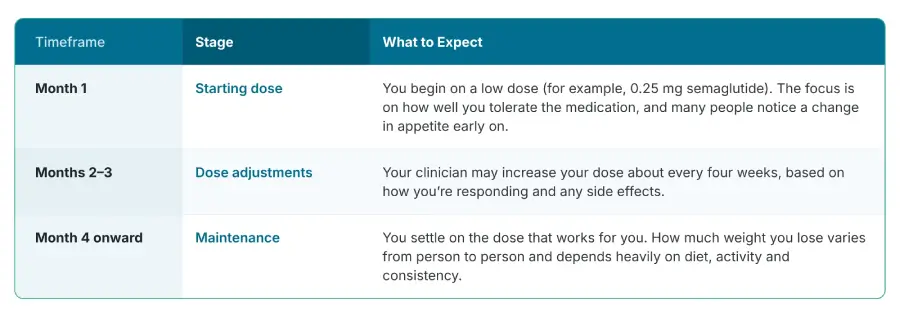
What to Expect: A Typical GLP-1 Treatment Timeline
GLP-1 treatment is gradual. Providers usually start you on a low dose so your body can adjust, then increase it over time.
Microdosing: A Lower-Cost Way to Start
Some providers offer GLP-1 microdosing, which starts you on a smaller, personalized dose of semaglutide or tirzepatide than the standard schedule. Because each fill uses less medication, a microdose plan can also come with a lower starting price. Any microdosing schedule should be set by your prescribing clinician based on your tolerance and goals, not picked off a menu.
Managing Side Effects
GLP-1 medications are generally well tolerated, but digestive side effects are common, especially in the first days after an injection or after a dose increase.
Nausea or mild vomiting: Stay hydrated, eat smaller meals and avoid greasy or high-fat foods.
Constipation or diarrhea: Add fiber, drink plenty of water and ask your clinician about an over-the-counter stool softener if needed.
Acid reflux or heartburn: Avoid lying down for 2–3 hours after eating and limit spicy or acidic foods.
Fatigue: Get enough protein and keep a consistent sleep schedule.
Safety note: Always check with your licensed clinician before changing your dose or combining treatments.
How Pricing Works: Starter Doses vs. Maintenance Doses
Starter doses ($49–$149/mo): Introductory prices usually cover the lowest starting doses (for example, 0.25–0.5 mg semaglutide). This is what most “cheapest weight loss injection” offers are really advertising, and it keeps your upfront cost low while you and your clinician see how you tolerate treatment.
Maintenance doses ($199–$299/mo): Higher doses need more medication, so monthly costs usually rise as your dose increases. Some providers charge the same price at every dose, which can work out cheaper over time.
Membership fees vs. all-inclusive pricing: Some platforms charge a monthly membership on top of the medication. Others bundle the consultation, prescription, check-ins and shipping into one flat monthly price, sometimes with a price lock. Once every fee is counted, all-inclusive plans are often the better value.
How to Choose an Affordable GLP-1 Provider
Check credentials: Look for US-licensed clinicians and state-licensed 503A pharmacies or FDA-registered 503B outsourcing facilities.
Look for hidden costs: Confirm whether lab work, shipping, consultations and needles or syringes are included in the advertised price.
Ask about ongoing support: The best providers offer unlimited messaging with your care team for side effects and dose adjustments.
Check how it ships: Medication should arrive in temperature-controlled packaging.
Frequently Asked Questions
Are $49 weight loss injections legit?
They can be. Introductory prices around $49–$99 typically cover your first month at a low starting dose, plus the clinician consultation. Expect the price to rise as your dose increases, and make sure the provider requires a medical consultation before prescribing.
Do I need a doctor’s consultation to get semaglutide online?
Yes. GLP-1 medications are prescription-only. Legitimate telehealth providers include an online questionnaire or video visit with a licensed clinician, who reviews your health history before prescribing.
Why do compounded GLP-1 medications cost less?
Compounded medications are prepared by licensed pharmacies as personalized prescriptions and are usually sold on a self-pay basis through telehealth providers, without the costs of insurance processing or in-person visits. Keep in mind that compounded medications are not FDA-approved.
Will my insurance cover GLP-1 injections?
Coverage for brand-name GLP-1 medications varies widely and often requires prior authorization or a qualifying diagnosis such as type 2 diabetes. Compounded options through telehealth providers are generally self-pay, so you can see the price upfront without waiting on insurance approval.
What’s the cheapest weight loss injection without insurance?
Usually a personalized compounded semaglutide plan at a starting dose, with introductory prices around $49–$99 for the first month. Costs go up at higher doses, so compare each provider’s full pricing, not just the first-month price.
What’s the cheapest way to get GLP-1 treatment?
For most people, it’s an online telehealth provider that offers personalized compounded semaglutide or tirzepatide and bundles the consultation, prescription and shipping into one monthly price.
How can I tell if a low-cost provider is legitimate?
Look for US-licensed clinicians, licensed compounding pharmacies and clear all-in pricing. A legitimate provider will always require a medical consultation before prescribing, so be wary of any site that skips this step.
Is the cheapest GLP-1 plan affordable long term?
The lowest prices are usually for starting doses. As your personalized plan moves to maintenance dosing, your monthly cost will likely go up, so check each provider’s full price list to understand what you’ll pay over time.
Are GLP-1 pills cheaper than injections?
Not always. Some providers offer oral or sublingual options at similar or higher prices than injections, and pricing varies widely between providers. If you’d rather avoid needles, ask the provider whether an oral option is available for your personalized plan, and compare the full monthly price of each.
Does the price go up as my dose increases?
It depends on the provider. Some raise the monthly price as you move to higher doses. Others charge the same price at every dose, which can work out cheaper over a full course of treatment. Ask for the provider’s full price list before you start, not just the price for the first month.
Can I use my HSA or FSA to pay for weight loss injections?
Often, yes. Many telehealth providers accept HSA and FSA cards for consultations and prescribed medication, which effectively lets you pay with pre-tax dollars. Eligibility depends on your plan, so check with your plan administrator and look for “HSA/FSA eligible” on the provider’s site before you sign up.
