


Trimi
About the brand
Trimi is an online prescription weight loss service designed for you when you want virtual access to GLP-1 treatment without relying on insurance approval. The brand focuses on compounded semaglutide and tirzepatide, with prescriptions reviewed by licensed clinicians and shipped to your door when treatment is approved. Trimi positions itself around simple pricing, online convenience, and ongoing provider access, which makes it attractive if you want fewer clinic visits and a ...more direct cash-pay route. Its website states that care is available in all 50 states through the Arora Health provider network, and that medication is dispensed through licensed 503A sterile compounding pharmacies. Read more
Price
Ease of use
Features
Service
 Free overnight shipping
 US-licensed clinicians
 Injections
Pros
-
 Online process
-
No need for insurance approval
-
Two medication options
-
Provider messaging included
-
Clear annual-plan pricing
Cons
-
 Lowest prices require longer billing terms
-
Average customer support
-
Compounded preparations are not FDA-approved drugs
-
No built-in coaching program
In-depth review
Process
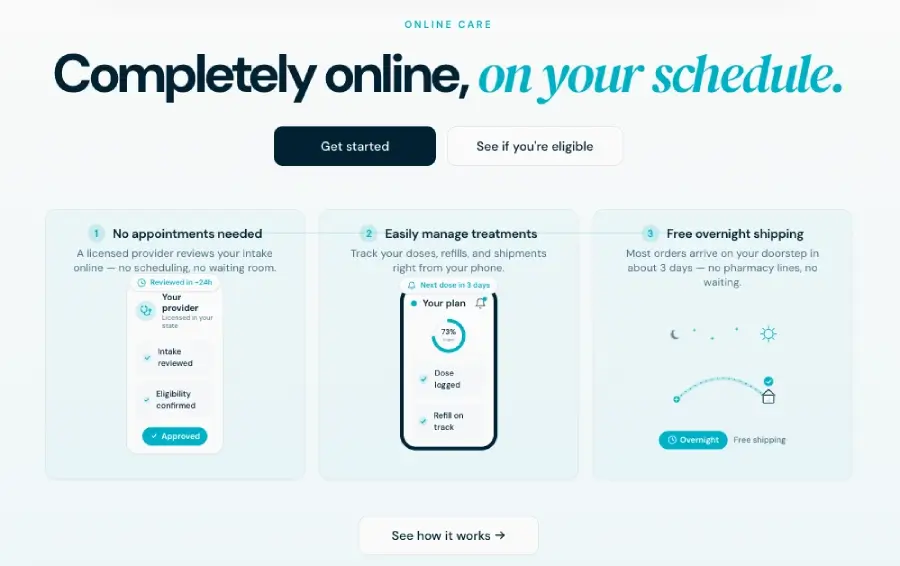
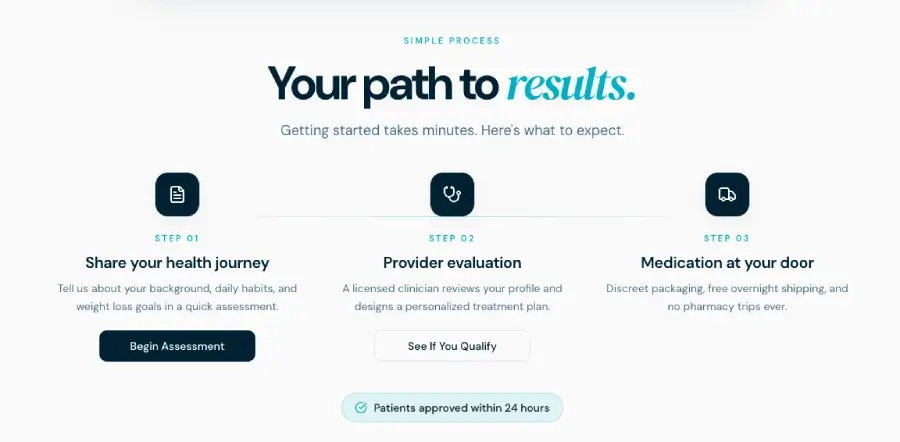
Trimi keeps the process simple if you want to start prescription weight loss treatment from home. You begin with an online intake in which you share your health history, current medications, weight-loss goals, and other details that help a provider decide whether treatment is appropriate. A licensed provider reviews your information before prescribing, so you are not simply choosing medication from a menu.
Once your provider reviews your intake, you may be prescribed compounded semaglutide or tirzepatide if treatment fits your health profile. These medications are administered as once-weekly injections, and a licensed provider can help you decide which option best fits your goals and history. Treatment can include ongoing dose adjustments based on your response, tolerability, and goals.
The convenience factor is one of Trimi’s strongest points. You do not need to schedule an in-person clinic visit, wait for insurance approval, or pick up medication locally. Once approved, your medication is shipped to your door, and the membership includes free shipping. This makes Trimi useful if you want a cash-pay model with fewer steps and less paperwork.
The process also has a few limitations. Because Trimi does not bill insurance, you pay out of pocket. That can be a positive if you want speed and price transparency, but it may not suit you if your insurance covers brand-name GLP-1 medication at a low copay. You also need to be comfortable with compounded medication and understand that compounded preparations are not the same as FDA-approved brand-name drugs.
Treatment Effectiveness
Trimi presents semaglutide and tirzepatide as prescription GLP-1 treatment options that may help reduce appetite, support fullness, and improve long-term weight management. Its treatment page references clinical-trial results from branded formulations, including STEP 1 data for semaglutide and SURMOUNT-1 data for tirzepatide. Trimi also makes clear that those trial figures come from branded medications, not Trimi’s compounded preparations.
On the Trimi treatment page, compounded semaglutide is described as a once-weekly GLP-1 injection that can achieve up to 16% weight loss. In comparison, compounded tirzepatide is described as a once-weekly dual GIP and GLP-1 option associated with up to 22% weight loss.
These numbers are best understood as branded-medication trial references rather than a personal guarantee. Your results can vary based on dose, adherence, medical history, nutrition, activity, side effects, and how consistently you follow your provider’s plan.
The choice between the two options matters. Semaglutide may be a better fit if you want the lower annual-plan price and a well-known GLP-1 pathway. Tirzepatide may appeal if you want a dual-receptor option and are comfortable paying more. In both cases, your provider makes the final decision based on your health profile.

These testimonials are taken directly from our partners’ website. We make no warranties regarding the efficiency of the product. Results may vary per patient.
Take the free 2-minute quiz now & see if you qualify
Ease of use
Trimi is easy to understand because the website presents two clear treatment paths: compounded semaglutide and compounded tirzepatide. You can compare the two options based on price, expected weight-loss range, mechanism, and weekly injection format.
A licensed provider helps determine what aligns with your goals and medical history, thereby preventing the process from feeling like a purely self-directed purchase.
The pricing structure is also fairly easy to follow once you understand that the lowest advertised monthly rates are tied to annual billing. You see a strong headline price, but you should still check the billing term before signing up. If you only want a short trial, the monthly plan may cost more than the advertised annual plan rate.
The website also does a decent job of explaining compounded medications, safety considerations, and the differences between active ingredients used in commercial formulations and those in compounded preparations. That transparency helps you make a more informed decision before paying.
Take the free 2-minute quiz now & see if you qualify
Customer Service
Trimi provides comprehensive support options to ensure you are never left without guidance. You get unlimited provider messaging directly through your treatment page for any clinical questions, supplemented by convenient email support and dedicated phone representatives available Monday through Friday from 9 AM to 6 PM EST. While direct live phone lines operate during standard business hours, the platform’s messaging system keeps you continuously connected to your care resources 24/7.

Phone Support
Phone support (9 am - 6 pm EST)

Live Online Chat
24/7 provider messaging

Email support is listed on the website
Leah Goldberg
We make the best effort to present up-to-date information; however, the terms of each offer can be revised according to the service provider’s discretion. The above shall not be considered as medical, health or professional advice for any matter.
Price
Ease of use
Features
Service

Thank you!